

Life sciences company Azenta (NASDAQ:AZTA) announced better-than-expected revenue in Q2 CY2026, with sales up 12% year on year to $161.2 million. Its non-GAAP profit of $0.16 per share was 60% above analysts’ consensus estimates.
Is now the time to buy Azenta? Find out by accessing our full research report, it’s free.
Azenta (AZTA) Q2 CY2026 Highlights:
- Revenue: $161.2 million vs analyst estimates of $149.2 million (12% year-on-year growth, 8% beat)
- Adjusted EPS: $0.16 vs analyst estimates of $0.10 (60% beat)
- Adjusted EBITDA: $18.46 million vs analyst estimates of $16.4 million (11.5% margin, 12.6% beat)
- Operating Margin: -2.6%, down from -0.5% in the same quarter last year
- Free Cash Flow was -$3.87 million, down from $14.97 million in the same quarter last year
- Market Capitalization: $1.38 billion
Company Overview
Serving as the guardian of some of medicine's most valuable materials, Azenta (NASDAQ:AZTA) provides biological sample management, storage, and genomic services that help pharmaceutical and biotechnology companies preserve and analyze critical research materials.
Revenue Growth
A company’s long-term performance is an indicator of its overall quality. Any business can have short-term success, but a top-tier one grows for years. Over the last five years, Azenta grew its sales at a mediocre 4.8% compounded annual growth rate. This was below our standard for the healthcare sector and is a poor baseline for our analysis.
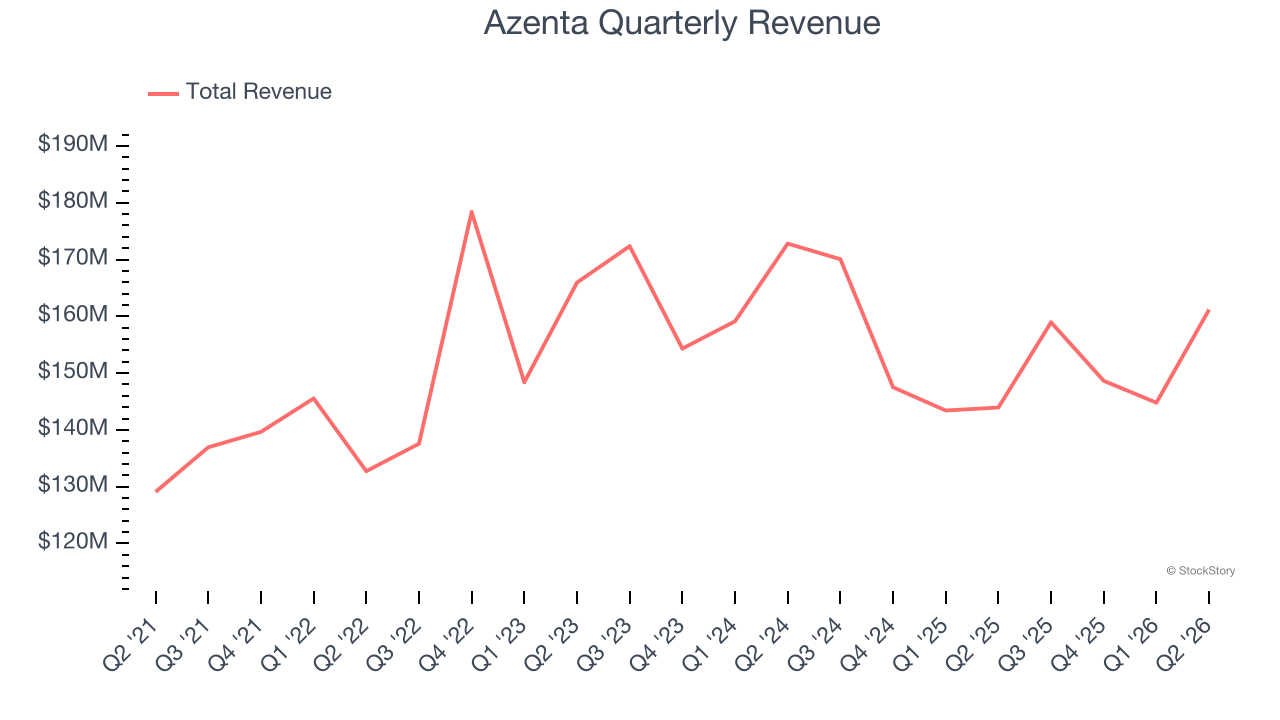
We at StockStory place the most emphasis on long-term growth, but within healthcare, a half-decade historical view may miss recent innovations or disruptive industry trends. Azenta’s performance shows it grew in the past but relinquished its gains over the last two years, as its revenue fell by 3.5% annually. 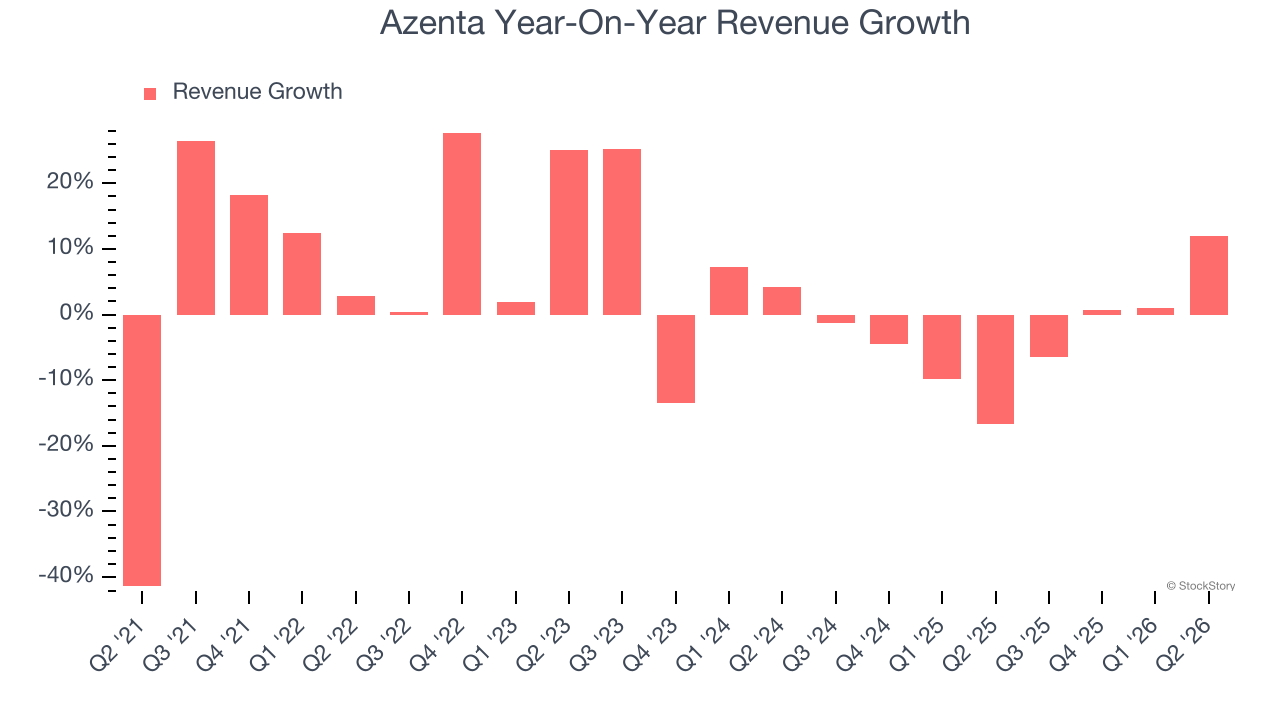
Azenta also breaks out the revenue for its most important segment, Sample Management. Over the last two years, Azenta’s Sample Management revenue averaged 3.2% year-on-year growth. This segment has outperformed its total sales during the same period, lifting the company’s performance. 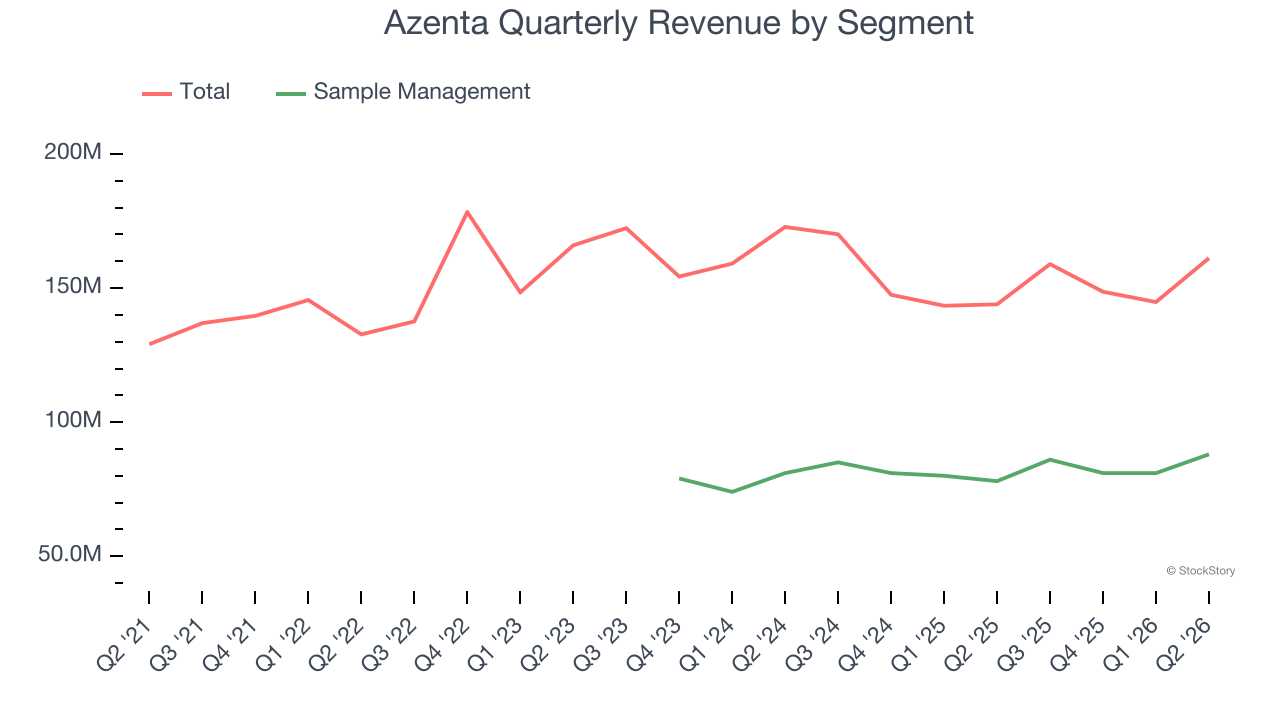
This quarter, Azenta reported year-on-year revenue growth of 12%, and its $161.2 million of revenue exceeded Wall Street’s estimates by 8%.
Looking ahead, sell-side analysts expect revenue to grow 1.9% over the next 12 months. While this projection suggests its newer products and services will spur better top-line performance, it is still below average for the sector.
ALSO WORTH WATCHING: Nvidia’s Quiet Partner. Nvidia’s chips cost a hundred grand. The connectors that make them work cost even more. One company makes them all.
Every AI server needs specialized infrastructure the chip companies don’t make. High-speed cables. Power connectors. Thermal sensors. This 90-year-old company built a monopoly on it. The AI boom just started. This stock is still flying under the radar. Claim The Stock Ticker Here for FREE.
Adjusted Operating Margin
Adjusted operating margin is a key measure of profitability. Think of it as net income (the bottom line) excluding the impact of non-recurring expenses, taxes, and interest on debt - metrics less connected to business fundamentals.
Azenta was profitable over the last five years but held back by its large cost base. Its average adjusted operating margin of 1.2% was weak for a healthcare business.
Analyzing the trend in its profitability, Azenta’s adjusted operating margin decreased by 6.3 percentage points over the last five years, but it rose by 1.4 percentage points on a two-year basis. Still, shareholders will want to see Azenta become more profitable in the future.
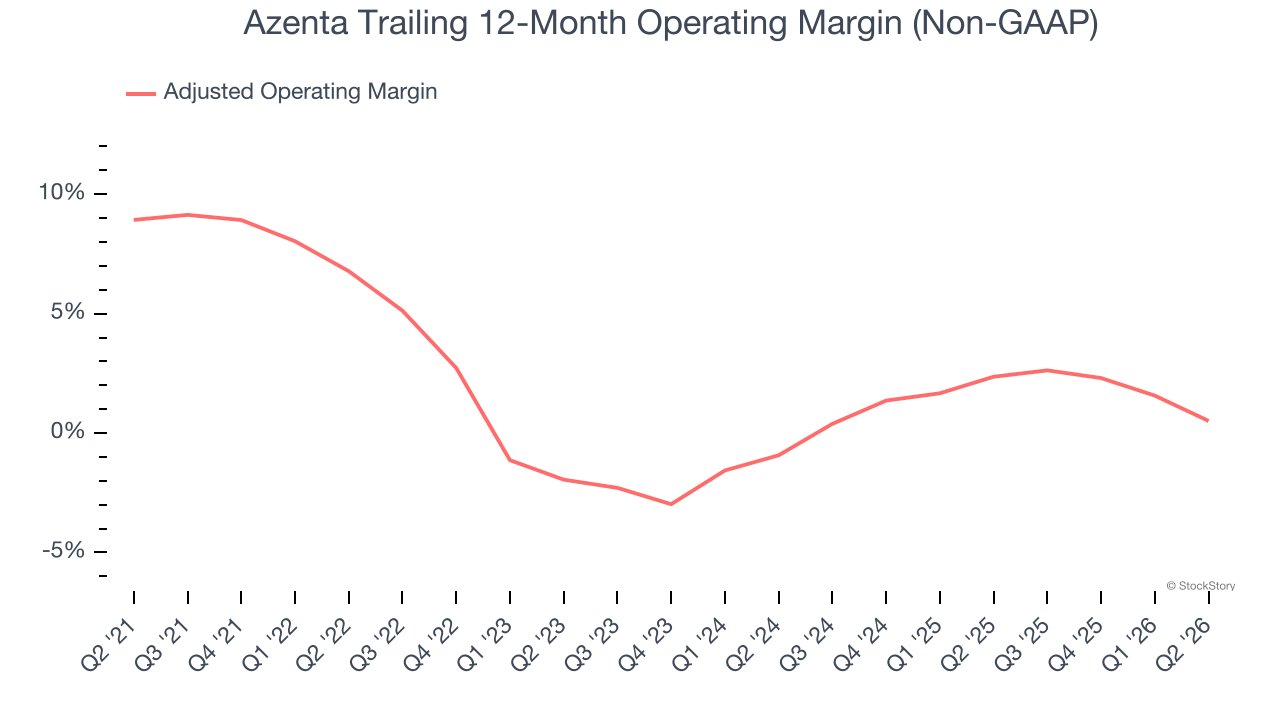
This quarter, Azenta’s breakeven margin was 0.3%, down 4.4 percentage points year on year. This contraction shows it was less efficient because its expenses grew faster than its revenue.
Earnings Per Share
Revenue trends explain a company’s historical growth, but the long-term change in earnings per share (EPS) points to the profitability of that growth — for example, a company could inflate its sales through excessive spending on advertising and promotions.
Sadly for Azenta, its EPS declined by 28.6% annually over the last five years while its revenue grew by 4.8%. This tells us the company became less profitable on a per-share basis as it expanded due to non-fundamental factors such as interest expenses and taxes.
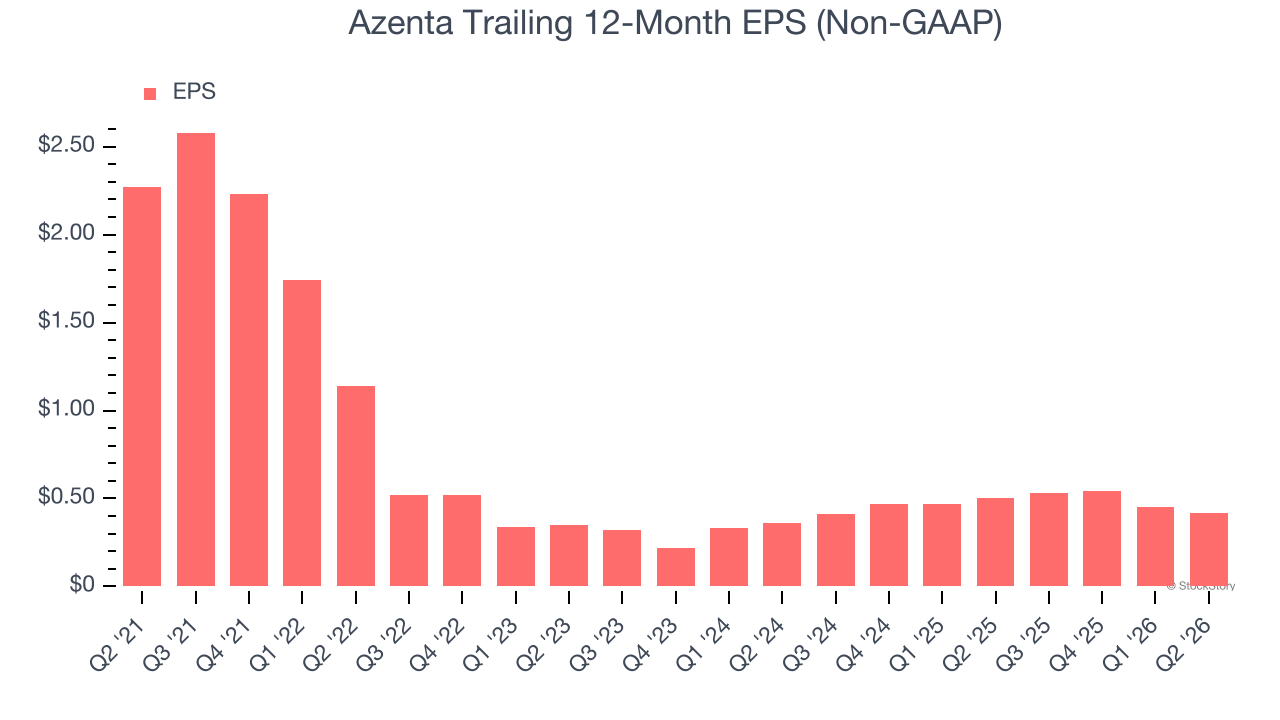
We can take a deeper look into Azenta’s earnings to better understand the drivers of its performance. As we mentioned earlier, Azenta’s adjusted operating margin declined by 6.3 percentage points over the last five years. This was the most relevant factor (aside from the revenue impact) behind its lower earnings; interest expenses and taxes can also affect EPS but don’t tell us as much about a company’s fundamentals.
In Q2, Azenta reported adjusted EPS of $0.16, down from $0.19 in the same quarter last year. Despite falling year on year, this print easily cleared analysts’ estimates. Over the next 12 months, Wall Street expects Azenta’s full-year EPS to grow 52.2% from $0.42 to $0.64.
Key Takeaways from Azenta’s Q2 Results
It was good to see Azenta beat analysts’ EPS expectations this quarter. We were also excited its revenue outperformed Wall Street’s estimates by a wide margin. Zooming out, we think this was a good print with some key areas of upside. The stock remained flat at $30 immediately after reporting.
Is Azenta an attractive investment opportunity at the current price? The latest quarter does matter, but not nearly as much as longer-term fundamentals and valuation, when deciding if the stock is a buy. We cover that in our actionable full research report which you can read here (it’s free).