

Resource management provider Itron (NASDAQ:ITRI) reported Q3 2026 results topping the market’s revenue expectations, with revenue up 3% year on year to $599.3 million. On the other hand, next quarter’s revenue guidance of $628.5 million was less impressive, coming in 1.9% below analysts’ consensus estimates. Its non-GAAP profit of $1.94 per share was 24.7% above analysts’ consensus estimates.
For more on Itron, read our full research report, available free.
Itron (ITRI) Q3 2026 highlights:
- Revenue $599.3 million vs S&P analysts’ consensus estimates of $595.8 million (3% year-on-year growth, 0.6% beat)
- Adjusted EPS $1.94 vs S&P analysts’ consensus estimates of $1.56 (24.7% beat)
- Adjusted EBITDA $114.5 million vs analysts’ consensus estimates of $93.85 million (19.1% margin, 22% beat)
- Revenue guidance $628.5 million at the midpoint for Q4 2026, below analysts’ consensus estimates of $640.8 million
- Adjusted EPS guidance Management raised its full-year adjusted EPS guidance to $6.77 at the midpoint, a 5.8% increase
- Operating margin 15.9%, up from 14.1% in the same quarter last year
- Free cash flow margin 15.9%, down from 19.5% in the same quarter last year
- Market capitalization $3.84 billion
“Itron delivered a strong third quarter, with revenue returning to growth at the top end of our outlook, record adjusted EBITDA, and earnings well ahead of our expectations — demonstrating the earnings leverage of our stronger operating model,” said Tom Deitrich, Itron’s President and CEO. “Utilities’ needs for capacity, reliability, resiliency, and affordability continue to drive demand for our technology, while our expanding software and services portfolio is supporting recurring revenue growth.”
Revenue growth
A company’s long-term revenue performance is one signal of its overall quality. Even a bad business can perform well for one or two quarters, but a top-tier one grows for years. Itron’s revenue grew at a sluggish 2.8% compounded annual growth rate over the last five years, falling short of our standards.
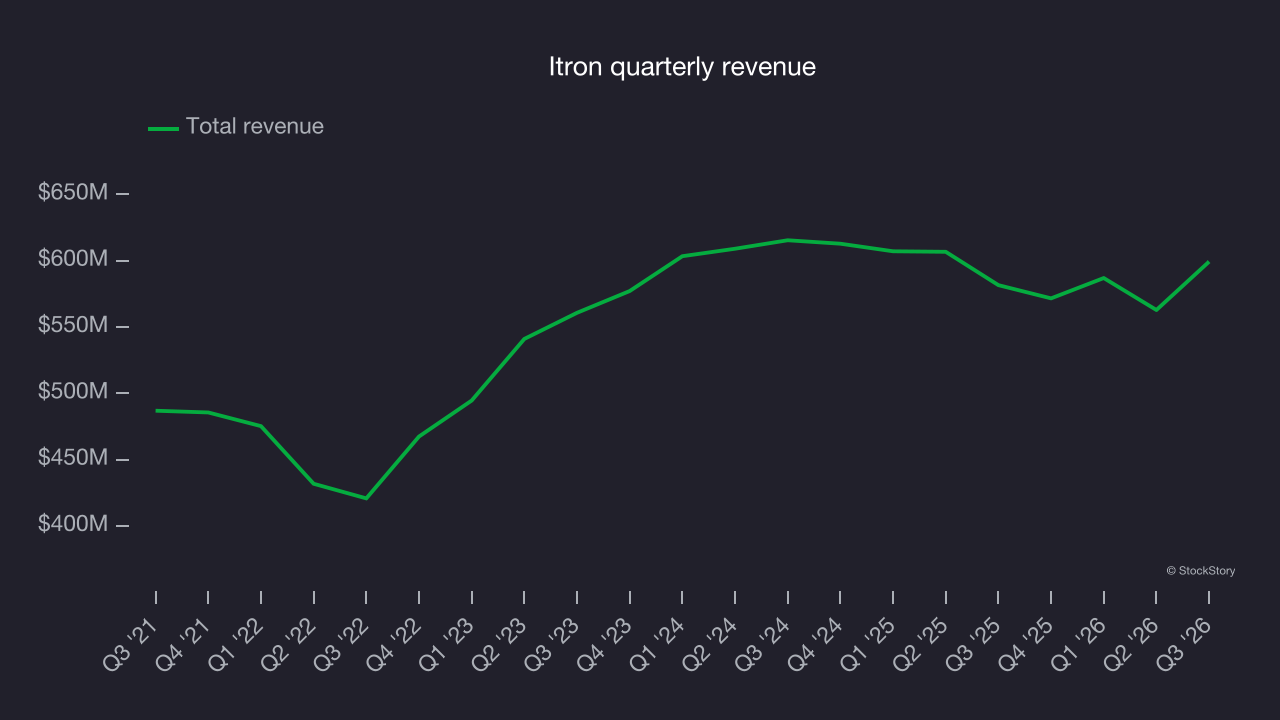
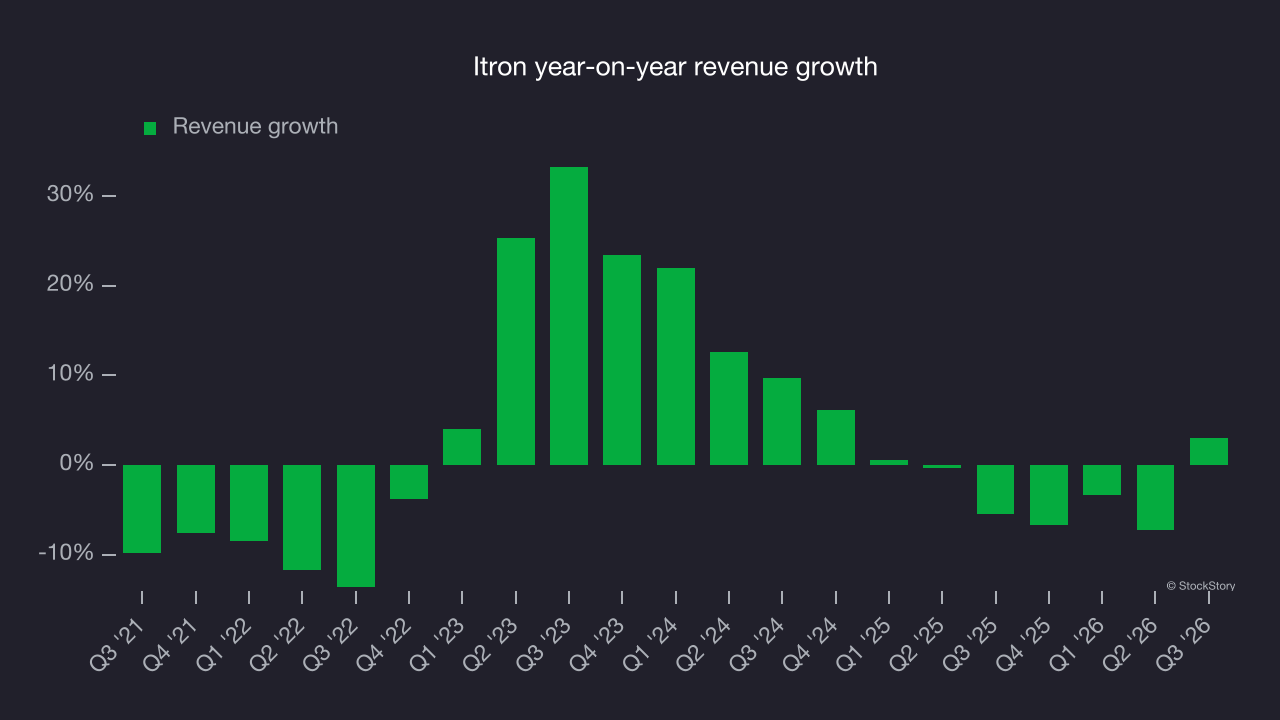
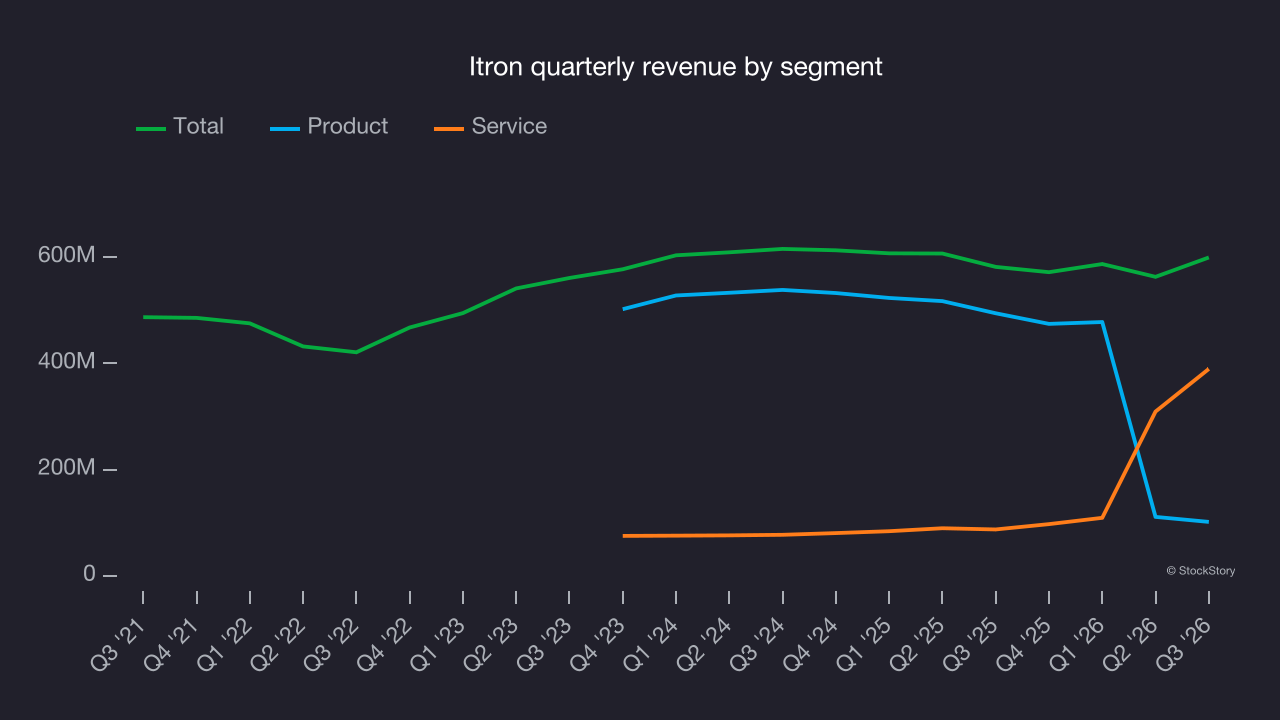
This quarter, Itron reported modest year-on-year revenue growth of 3% but beat Wall Street’s consensus estimates by 0.6%. Company management is currently guiding for a 9.9% year-on-year increase in revenue next quarter.
Looking further ahead, sell-side analysts expect revenue to grow 8.1% over the next 12 months, according to S&P, an improvement versus the last two years. This projection is above average for the sector and indicates its newer products and services will fuel better top-line performance.
Operating margin
Operating margin is a key measure of profitability. Think of it as net income – the bottom line – excluding the impact of taxes and interest on debt, which are less connected to business fundamentals.
Itron was profitable over the last five years but held back by its large cost base. Its average operating margin of 7.5% was weak for an industrials business. That result is surprising given its high gross margin baseline.
On the positive side, Itron’s operating margin rose by 20.7 percentage points over the last five years, as its revenue growth provided operating leverage.
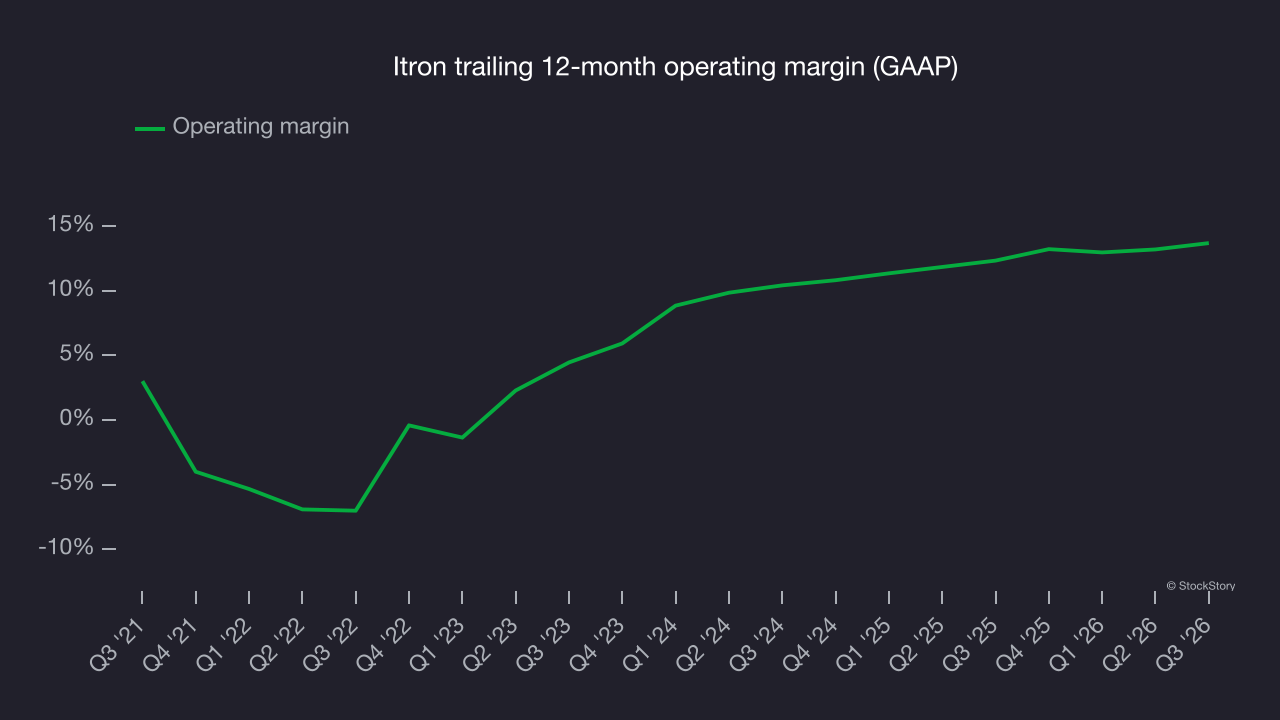
In Q3, Itron generated an operating margin of 15.9%, up 1.9 percentage points year on year. Its gross margin expanded more than its operating margin, indicating that leverage on its cost of sales was the primary driver of the recent efficiency improvement.
Earnings per share
Revenue trends explain a company’s historical growth, but the long-term change in earnings per share (EPS) points to the profitability of that growth. For example, a company could inflate its revenue through excessive spending on advertising and promotions.
Itron’s EPS grew at a 35.1% compounded annual growth rate over the last five years, higher than its 2.8% annualized revenue growth. This indicates the company became more profitable on a per-share basis as it expanded.
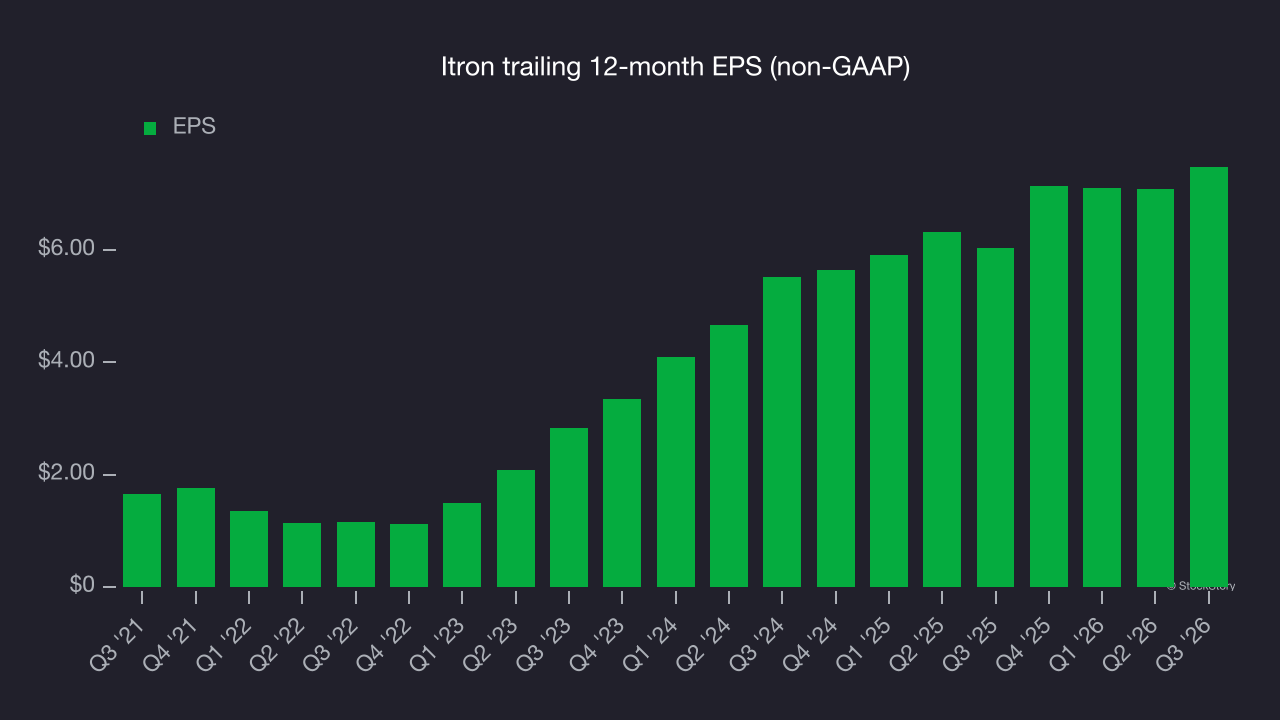
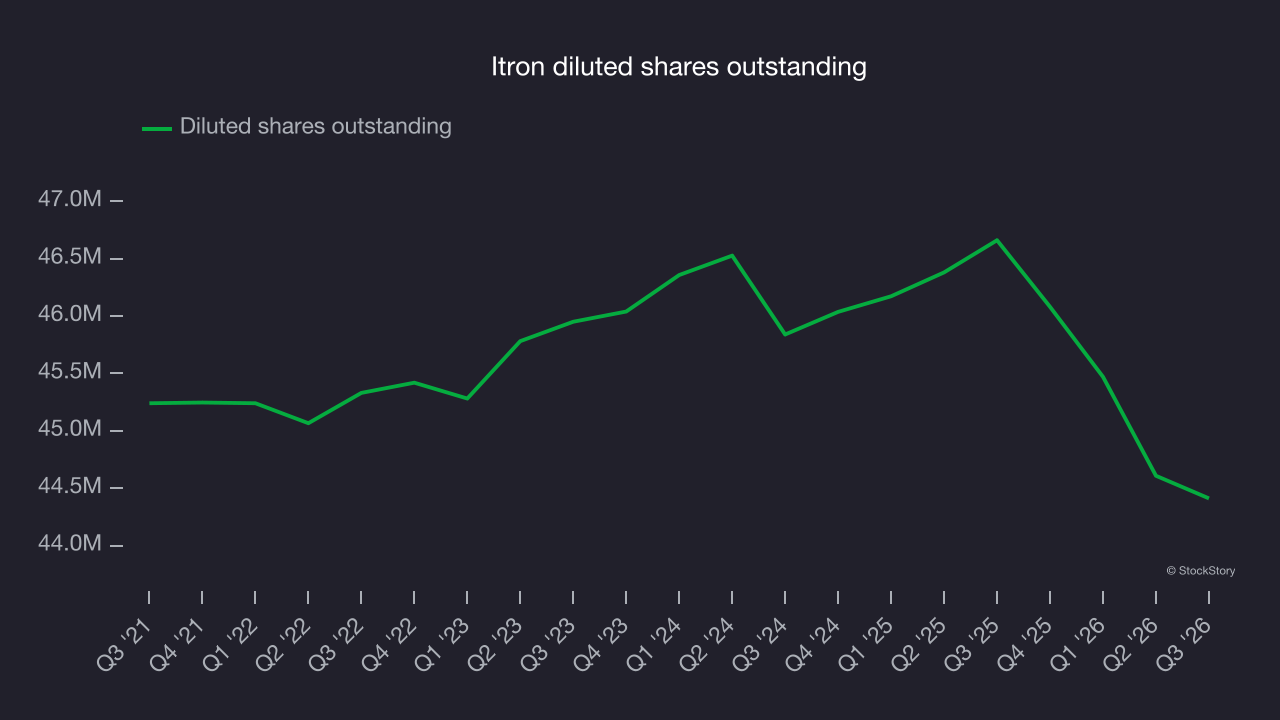
Like with revenue, we analyze EPS over a more recent period because it can provide insight into an emerging theme or development for the business.
For Itron, its two-year annual EPS growth of 16.4% was lower than its five-year trend. Still, that was a good growth rate.
In Q3, Itron reported adjusted EPS of $1.94, up from $1.54 in the same quarter last year. This easily cleared analysts’ consensus estimates, a positive result for shareholders. Over the next 12 months, Wall Street expects Itron’s full-year EPS to shrink by 9.9% from $7.48 to $6.74, according to S&P.
Key takeaways from Itron’s Q3 results
Itron’s sizable EBITDA beat and full-year EPS guidance above Wall Street’s consensus gave the quarter clear positives. On the other hand, next-quarter EPS and revenue guidance both fell short of consensus estimates. Shares edged higher 1.8% to $89.35 immediately after the results.
Itron had a solid quarterly earnings result, but assessing the stock as an investment requires a broader view. That means considering valuation and business quality as well as the latest earnings. For more on Itron, read our full research report here (it’s free).