
A practical framework for checking platform sources, community operators, shared files, and account security before acting on financial information.
Online financial communities make it easy for investors to exchange ideas, follow market developments, and discuss market analysis in real time. Messaging platforms extend those conversations across phones, desktops, and browsers, but the same convenience can also be exploited by impersonators, phishing campaigns, and fraudulent investment groups.
The core problem is not the messaging technology itself. A familiar app can host both legitimate and deceptive communities, while a polished group profile can make unverified claims appear credible. Investors therefore need to verify three things separately: the platform they are using, the people operating the community, and the financial information being presented.
A short verification routine before installing software, opening shared files, or transferring money can prevent many avoidable mistakes.

Figure 1. Verify the platform and source before acting on investment-group links or downloads.
Verify the Platform Before Verifying the Community
Start by confirming where the messaging service is being accessed. Search results can place official websites, app-store listings, news stories, tutorials, community resources, and third-party guides next to one another. Those pages can look similar even though they serve very different purposes.
Investors researching Telegram, for example, may consult a Telegram website verification guide to understand how informational resources differ from official platform pages and why software sources should be independently checked.
Before entering credentials or installing software, users should confirm a few basic details:
- The domain or app-store listing matches the service they intended to use.
- The developer or publisher identity is consistent with recognized platform information.
- The page does not redirect unexpectedly or pressure users to install unrelated software.
- The browser or operating system is not displaying security or certificate warnings.
- A third-party tutorial or resource page is not being mistaken for the platform’s official website.
Lookalike domains, imitation branding, and misleading download buttons are common social-engineering techniques. Verification should therefore happen before a user signs in, not after credentials have already been entered.
Treat Group-Shared Downloads With Extra Caution
Investment communities often share reports, charts, spreadsheets, browser tools, and links to third-party services. Most files may be harmless, but the fact that something was posted by an administrator or a long-standing member is not evidence that it is safe.
Executable files, modified mobile apps, unofficial APK packages, browser extensions, and unfamiliar login tools deserve particular scrutiny. Requests to disable antivirus software, bypass operating-system warnings, install certificates, or enable unknown application sources should be treated as warning signs rather than routine setup instructions.
Before installing a client, users unfamiliar with Telegram can review a Telegram download and setup guide to understand general client availability, device compatibility, and basic setup considerations. The final installation source should still be verified independently through trusted platform or app-store information.
A useful rule is simple: the more unusual the installation process becomes, the more verification it deserves.
A Legitimate App Does Not Make Every Investment Group Legitimate
A secure or well-known messaging platform does not verify the identity, qualifications, or intentions of the people using it. Fraudulent groups can operate on legitimate services, just as legitimate analysts and investors can.
Common warning signs include:
- Claims that an investment outcome is certain or carries no meaningful risk.
- Pressure to transfer money, share sensitive information, or make decisions immediately.
- Anonymous administrators making professional or regulatory claims that cannot be verified.
- Screenshots, follower counts, or testimonials presented as proof of investment performance.
- Requests to use unofficial personal payment channels instead of a verified company process.
- Requests for account passwords, authentication codes, or recovery information.
No single warning sign proves fraud, but several appearing together should trigger a much higher level of scrutiny.
Verify Financial Credentials Independently
A polished profile, professional logo, active channel, and detailed market commentary can all be created without proving who is behind them. If someone claims to represent a brokerage, advisory firm, fund, or other financial service provider, investors should verify that relationship through independent sources.
Depending on the market and jurisdiction, that may mean checking an appropriate regulatory register, company record, professional directory, or the organization’s own published contact information. Contact details should ideally be obtained independently rather than from a link supplied by the person being checked.
The same principle applies to performance claims. Member counts, profit screenshots, testimonials, and social-media engagement can be manipulated and should not substitute for verifiable information.
Protect the Messaging Account Itself
Even legitimate communities can become risky if a member’s account is compromised. An attacker who gains access to a messaging account may see private conversations, contacts, group memberships, shared documents, and other sensitive information.
Useful controls to review include:
- Two-step verification or another available secondary authentication layer.
- Active sessions, so unfamiliar devices can be identified and removed.
- Phone-number and profile visibility, particularly in large public groups.
- Recovery information, which should be protected as carefully as login credentials.
- Verification codes, which should never be shared with group administrators or supposed support representatives.
Account-security settings should be reviewed periodically, especially after changing devices, traveling, or joining unfamiliar public communities.
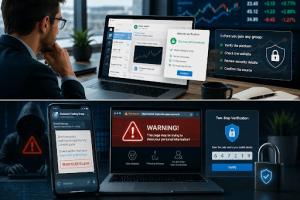
Figure 2. Suspicious links, phishing pages, and account-takeover attempts require independent verification and strong authentication.
Treat Unknown Files and Links as Untrusted
Financial communities naturally exchange large amounts of information, including PDFs, spreadsheets, market reports, account links, analytical tools, and browser-based dashboards. The same formats can also be used to deliver malware or capture credentials.
Unexpected files that request macros, browser permissions, application installation, or login details deserve particular caution. Shortened URLs also require attention because they hide the final destination. A link that appears routine can redirect to a page imitating a financial service, account portal, messaging service, or research platform.
For important financial services, it is safer to navigate independently to a known destination than to rely on an unsolicited link inside a chat message.
Recognize Common Warning Signs
The following patterns do not automatically prove misconduct, but they are useful signals that more verification is needed.
| Warning Sign | Why It Matters |
| Claims of guaranteed outcomes | Legitimate investments involve uncertainty and should be evaluated independently. |
| Urgent transfer requests | Artificial urgency can reduce the time available for independent checks. |
| Unknown software downloads | Files or extensions may contain malware or credential-stealing code. |
| Requests to use personal payment channels | The requested payment route may not match the claimed organization or service. |
| Anonymous or unverifiable administrators | Identity, employment, or credentials may be difficult to confirm. |
| Requests for authentication codes | Sharing a code can lead directly to account takeover. |
Build a Verification Habit Before Acting
The strongest defense is a repeatable process rather than an attempt to memorize every scam. Before joining a financial community or acting on information received through a messaging app, investors can ask:
- Who operates this community, and can I verify that identity independently?
- Am I accessing the messaging platform through a source I trust?
- Is anyone asking me to install unfamiliar software or grant unusual permissions?
- Am I being pressured to transfer money or make an immediate decision?
- Can the financial claim be confirmed through an independent source?
- Am I being asked for credentials, recovery information, or authentication codes?
These questions create useful friction at the point where social-engineering schemes typically try to remove it.
Final Thoughts
Messaging platforms can be useful for market discussion, professional networking, investor education, and community building. The technology, however, is only one part of the trust equation.
Investors still need to distinguish official services from informational resources, verify software sources before installation, confirm financial identities independently, protect their accounts, and treat unfamiliar files and transaction requests with caution.
A consistent verification habit is more valuable than confidence based on appearances. Before trusting a group, an administrator, an investment claim, or a download link, confirm what it is, who is behind it, and whether the information can be validated outside the conversation itself.