
Introduction
For many Americans living abroad, the idea of dual citizenship is appealing. It offers flexibility, expanded travel options, and access to local benefits, while maintaining ties to the United States.
Most European countries have laws that allow dual citizenship with the U.S., though the rules vary widely depending on the country, residency requirements, and individual circumstances. Understanding these rules is essential before pursuing dual nationality.
This guide explores the realities of holding dual citizenship between the U.S. and European countries, including benefits, challenges, and practical considerations.
Why Americans Seek Dual Citizenship in Europe
Americans often pursue dual citizenship for several reasons:
Ease of Travel: European citizenship provides visa-free travel across the Schengen Area and beyond.
Work Opportunities: Dual citizens can work without visas or work permits in EU countries.
Healthcare and Social Benefits: Access to local healthcare and social programs.
Property and Residency: Simplifies buying property and long-term residency.
Family Ties: Citizenship through descent or marriage allows individuals to claim nationality in their ancestral country.
Common European Countries That Allow Dual Citizenship
While rules differ, many European countries generally permit Americans to hold dual citizenship. Some examples include:
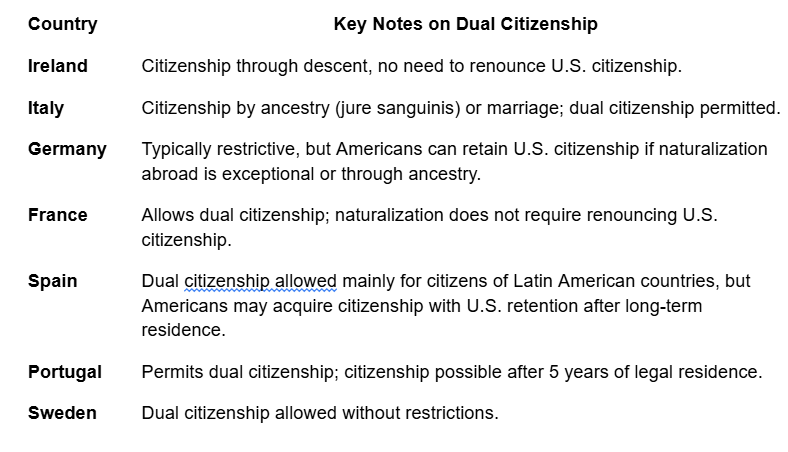
Tip: Each country has unique rules and documentation requirements, so research thoroughly before applying.
Pathways to Dual Citizenship
Americans can typically acquire dual citizenship in Europe through:
Descent (Jure Sanguinis): Claim citizenship through parents or grandparents.
Marriage: Citizenship may be available after a period of marriage and residence.
Naturalization: Long-term residency, work, or study permits may eventually lead to citizenship.
Special Programs: Some countries have citizenship by investment programs.
Practical Note: Each pathway requires documentation, residency compliance, and sometimes language or cultural knowledge tests.
Benefits of Holding Dual Citizenship
Dual citizenship offers tangible benefits for Americans abroad:
Travel Freedom: U.S. passport and EU passport combined for broader visa-free travel.
Employment Flexibility: Work rights in the European Union and other agreements.
Education Access: Eligibility for local universities at domestic rates.
Property and Inheritance: Easier property ownership and access to local inheritance laws.
Healthcare: Access to national healthcare systems in many European countries.
Challenges and Considerations
While attractive, dual citizenship comes with challenges:
Taxes: U.S. citizens remain liable for reporting worldwide income. Complicated tax filing may be required.
Military Service: Some countries require compulsory military service for citizens.
Legal Obligations: Voting, jury duty, or other civic duties may apply in both countries.
Loss of Benefits: Certain U.S. benefits, like government security clearances, may be affected.
Tip: Consult legal and tax professionals before pursuing dual citizenship to understand obligations in both countries.
Maintaining Dual Citizenship
To maintain dual citizenship successfully:
Keep passports updated in both countries.
File taxes in the U.S. annually, even if living abroad.
Observe local laws, residency requirements, and naturalization obligations.
Stay informed about changes in citizenship laws in the country of residence.
Frequently Asked Questions
Can Americans hold dual citizenship with any European country?
Not all. Most countries allow dual citizenship, but some (e.g., Germany in some cases) have restrictions. Always check local laws.
Does dual citizenship affect U.S. taxes?
Yes. Americans must report worldwide income, so dual citizens may face complicated tax filing. Foreign tax credits and exclusions can help reduce liability.
How long does it take to gain dual citizenship in Europe?
It varies: ancestry claims may be immediate, marriage may take 3–5 years, and naturalization can take 5–10 years depending on the country.
Can dual citizenship be revoked?
Yes, in rare cases due to fraud, failure to meet residency requirements, or voluntary renunciation.
Are U.S. passports affected by dual citizenship?
No. The U.S. permits dual citizenship, so Americans do not have to renounce U.S. citizenship when acquiring European nationality.
Does dual citizenship allow property ownership?
Yes, in most European countries, dual citizens enjoy the same rights as nationals to purchase and own property.
Conclusion
Dual citizenship with a European country offers Americans flexibility, lifestyle advantages, and global opportunities. From travel freedom to work rights, property ownership, and education access, the benefits are significant.
However, dual citizenship also comes with financial, legal, and civic responsibilities, including potential complicated tax filing and compliance with two countries’ laws.
By researching specific country requirements, planning finances carefully, and understanding obligations in both countries, Americans can successfully navigate dual nationality and enjoy the best of both worlds.