

Introduction
If your firm works with property transfers, settlements, or goes over contracts, AML software for conveyancers is now a must. AML compliance is a key part of many real estate cases, so law firms now need an easy way to check clients, assess risk, and keep records. The main problem is doing this on every matter, without slowing down the daily work.
Understanding AML Compliance Obligations for Conveyancers in Australia

AML software for conveyancers and property lawyers in Australia now has to keep up with compliance duties. These AML/CTF obligations cover most parts of buying, selling, or moving property for clients.
AUSTRAC guidance and other regulatory requirements mean your practice must have a clear way to do checks, keep records, and make reports. AML software helps by turning these rules into easy steps that work for real estate agents, conveyancers, and firms that focus on property.
The Role of Tranche 2 Legislation in Real Estate Transactions
Tranche 2 has changed daily operations for conveyancing practices. From July 1, 2026, many real estate tasks will fall under AML/CTF Act rules—this isn’t something to delay; it’s already impacting your office.
Your files may be covered if you handle sales, purchases, transfers, settlements, contract reviews, or property due diligence. Money laundering regulations now apply to routine work—not just occasional cases.
Purpose-built software is essential. Generic systems may miss how files move in this area. Specialised software meets Austrac Tranche expectations, aligns with law society requirements, and helps you comply with money laundering regulations.
Key AML/CTF Activities Conveyancers Must Implement
Your AML/CTF program should follow the same key steps for every case. This isn’t just paperwork—the goal is to set up effective AML controls before any money moves.
You must include:
Customer due diligence before representing a client
Enhanced due diligence for overseas, company, or trust buyers
Suspicious matter reports when conduct or funding seems unusual
Your AML program should also cover staff training, record-keeping, escalation procedures, and name a compliance lead. If a buyer changes their source of funds late in settlement, your process should clearly guide staff on next steps—no one should be left guessing.
Setting Up an AML Program: Essentials for Conveyancing Practices
Setting up an AML program in a conveyancing practice begins with good structure. You will need AUSTRAC enrolment. Have a written program in place. Appoint a compliance officer. And create a clear way to check every matter from instruction to settlement.
It is also important that your system makes an audit trail. For those in professional services, this will mean you keep checks recorded. Store all decisions and file history, so it can still be shown years later.
Effective Steps for Enrolling and Structuring Your AML Approach
Start by completing AUSTRAC enrolment if your practice hasn’t already. Next, create a written AML framework tailored to your specific matters instead of using a generic template.
Your setup should include:
A compliance officer with clear responsibilities
Risk assessment steps based on each matter
Staff training and record-keeping policies under the AML/CTF regime
Then, test your process with an actual file—such as a standard purchase involving trust funds. If staff are unclear about when to verify identity, assess risk, or escalate concerns, revise your structure accordingly.
Starter Kits and Customisation in AML Software for Conveyancers
Many law firms need a faster way to start, so a conveyancing program starter kit is useful. It provides a base program, guided setup, and an easy path—no need to build from scratch.
However, not all firms handle files the same way. Some focus on residential sales; others deal more with transfers, due diligence, or electronic settlements. Customisation matters because your checks should match your daily workflow.
Good AML compliance software lets you start with an AUSTRAC-style kit and then adjust risk factors, forms, and approval steps as needed. This saves time and ensures the program fits your firm’s needs.
Features Conveyancers Should Look For in AML Software
The right AML software should help you check risk factors for each matter. You should be able to do this without having to do extra manual admin. This means you get identity verification, PEP screening, and prompts that match the way property files move forward.
You should look for ongoing CDD tools and a full audit trail as well. If a regulator wants to know why you rated a file as low or high risk, your system should show this clearly.
Automated Risk Assessment Functionality Explained
Good software helps you quickly spot risky deals by flagging potential issues in the details you enter. While it doesn't replace your judgment, it streamlines risk assessment and builds trust in the process.
Common triggers include:
Complex ownership structures or unclear ultimate owners
Overseas clients, unusual funding sources, or names on watchlists
For example, if a buyer is a company with layered ownership and the source of funds changes near settlement, the system flags it for review. This creates an audit trail and helps compliance officers decide if further checks are needed.
Tools for Customer Due Diligence and Ongoing Compliance Monitoring
Customer due diligence (CDD) should be done before starting work and continuously monitored throughout. Settlement agents and conveyancers must watch for changes in timelines, parties, or payment methods.
An effective system keeps CDD records organised, enables regular checks, and allows for enhanced due diligence when risks arise. This is useful if a case initially seems normal but later shows suspicious signs, like unexpected funding or changed instructions.
Such a system also supports periodic reviews by reminding your team to review files before settlement, document findings, and store evidence for future reference.
Running Risk Assessments on Every Matter: Practical Use Cases
The real value is there when risk assessment is part of every file, not seen as a different job. This helps your team see suspicious activity early and use client due diligence the same way each time.
It also helps the compliance officer see the real people behind accounts, spot funding concerns, and know when something needs to be raised. The next examples show how this works in practice.
How AML Software Identifies High-Risk Property Transactions
The software quickly flags high-risk deals by checking details against risk factors, but your team still needs to review and act.
Common warning signs include:
unclear source of funds
positive PEP screening match
trust or company ownership needing further review
For example, if a buyer is linked to a trust and funds come from a third party, enhanced due diligence may be needed before settlement. If the system misses this alert, the risk might go unnoticed until much later.
Examples of Matter-Based Checks and Alerts
Matter-based checks work best when they follow the file from intake to completion. You are not only checking the client once. You are checking whether new facts, new delivery channels, or funding changes create fresh concerns.
Here is a simple example of how alerts can work inside a reporting entity process:
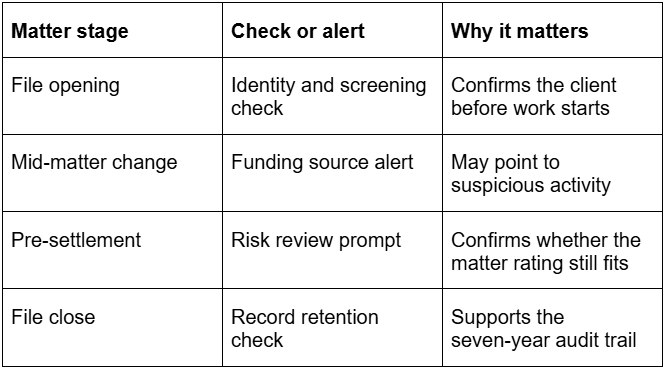
This kind of structure helps staff know what to do at each point. It also means your audit trail shows not just the outcome, but the steps taken to reach it.
Conclusion
Using strong AML software is essential for conveyancers. It streamlines work, ensures compliance, and protects your practice. With effective risk assessment and ongoing monitoring, you can manage matters more confidently and build client trust. Key features like real-time risk assessment and continuous monitoring are especially valuable for high-risk transactions. When choosing AML solutions, prioritise robust options to stay compliant and future-ready. To see how AML software fits your practice, request a free trial, demo, or consultation today.
Frequently Asked Questions
Can AML software be customised for different conveyancing workflows?
Yes. Good AML compliance software lets you change it to fit your needs. Your conveyancing practice can set checks to match its own file stages and steps. That is important for law firms, since they have different ways of working. Some may use other practice management software instead of getting a new one.
Does AML software support ongoing monitoring for settlement agents?
Yes. It helps settlement agents with ongoing monitoring. The system asks for periodic reviews. It records changes on the matter. It keeps an audit trail. This makes AML/CTF compliance easier if client details, funding, or risk levels change before the settlement is done.
What are the long-term benefits of effective AML compliance for conveyancers?
Good AML compliance does more than just match regulatory requirements. It lets your compliance officer handle files with confidence. It keeps referral relationships safe. The process also cuts down the chance of mistakes. This way, it lowers the risk of financial crime for people working with clients, property deals, and real estate agents in real estate.